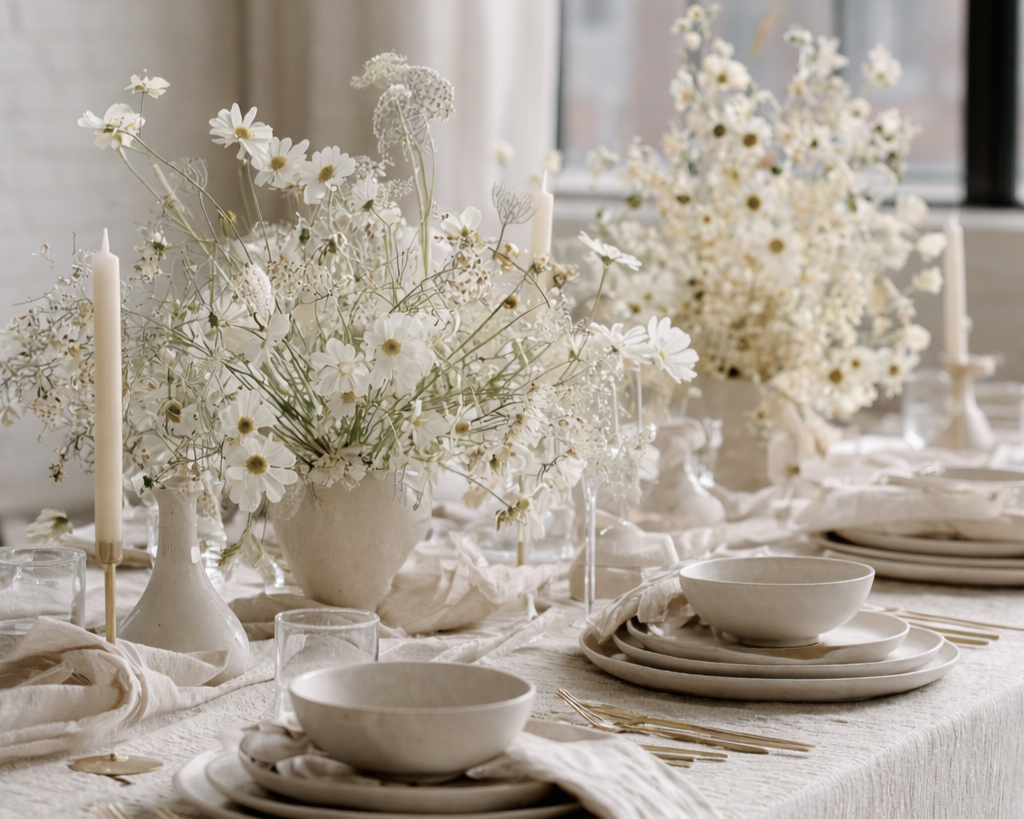
A table with intention sets the tone for everything that follows. It’s the first impression guests receive and the quiet signal that this moment has been considered. Before the candles are lit or the first course is served, the table establishes mood, rhythm, and expectation — inviting people to slow down, lean in, and stay awhile.
This is where design and hospitality intersect. Not as ornament, but as atmosphere. The layering of textures, the balance of scale, the warmth of candlelight — all working together to create a setting that feels composed and welcoming. When the table is thoughtfully arranged, the evening unfolds more naturally. Conversation flows. The room softens. The gathering finds its pace.
A table like this begins with a point of view — a sense of how the evening should feel — and comes together through a series of considered choices. Once that feeling is clear, the rest follows naturally.
The Mood Comes First
Every intentional table begins with a single decision: how do you want the gathering to feel?
That feeling becomes the filter for everything that follows — before the menu is finalized, before the guest list is set. Are you trying to capture the warmth of a long table and an unhurried night in Tuscany, like our Chianti Club Edit, with candlelight, layered textures, and a sense of relaxed indulgence? Or something lighter and more restrained, like a Winter White Luncheon Edit — airy and elegant, with crisp linens, pale ceramics, and just enough detail to feel special without feeling formal?
Once the mood is clear, the table starts to take shape almost instinctively. Colors narrow. Materials repeat. The scale of each element becomes more intentional. What belongs feels obvious; what doesn’t quietly falls away.
This is where hosting shifts from assembling pieces to expressing a point of view. The table begins to feel like a scene — one that supports the kind of gathering you want to have, whether that’s intimate and lingering or bright and celebratory.
At The Fête Edit, every edit begins this way: with the mood first. The feeling leads, and the details follow — reinforcing the experience rather than competing with it.

Every intentional table begins with a single decision: how do you want the gathering to feel?
Designed for Conversation
An intentional table is designed with people in mind — how they’ll sit, speak, and move through the evening. The most important consideration isn’t how the table looks from above, but how it feels once everyone has taken their seat.
Centerpieces stay below eye level, allowing conversation to move easily across the table. Candles add warmth without blocking sightlines or overwhelming the setting. Space is treated as deliberately as any object, giving the table room to breathe and the gathering room to unfold.
When scale is considered, everything feels calmer. Guests don’t have to navigate around towering arrangements or reach past cluttered place settings. The table becomes a shared surface rather than a display — one that encourages lingering, passing plates, and staying a little longer.
This is where design quietly supports hospitality. Nothing competes for attention, and nothing feels excessive. The table does its job well, and the evening benefits from it.
Candlelight as Atmosphere
Candlelight is the simplest way to change the mood of a room — and one of the most powerful tools on the table.
It softens edges. It lowers the volume. It makes everything feel more intimate without asking for attention. This is why candlelight remains our favorite design trick — it shapes the atmosphere without competing with the gathering itself.
Unlike florals or centerpieces, candlelight doesn’t compete with conversation; it supports it, casting warmth across the table and encouraging people to linger a little longer.
The key is restraint and repetition. Clusters of candles feel more intentional than a single statement piece. Varying heights add rhythm without disrupting sightlines. Glass, brass, or ceramic holders reflect light gently, creating a glow that feels layered rather than theatrical.
When candlelight is used well, it becomes the unifying element — tying together linens, tableware, and textures into a cohesive whole. The table feels finished, not styled. Welcoming, not staged.
It’s a subtle shift, but a meaningful one. Candlelight signals that this moment is meant to be shared — slowly, comfortably, and with intention.

An intentional table is designed with people in mind — how they’ll sit, speak, and move through the evening.
The Table, Grounded
Every intentional table has a quiet foundation — the elements that ground the setting and allow everything else to build on top of it.
Linens are often where that foundation begins. A tablecloth or runner sets the base note for the entire table, whether that’s relaxed and tactile or crisp and refined. Natural fabrics add softness and movement; bare wood can feel just as intentional when the rest of the table is edited with care.
From there, repetition does the work. Plates echo one another. Flatware stays consistent. Glassware feels deliberate rather than abundant. When these pieces are chosen with restraint, the table reads as composed instead of crowded.
This isn’t about creating layers for their own sake. It’s about giving the eye somewhere to rest. A limited palette feels calmer. Familiar forms create rhythm. The foundation quietly holds the table together so the more expressive elements — candlelight, florals, food — can stand out without overwhelming the setting.
When the base is considered, the table feels steady. And that steadiness carries through the gathering, making everything that follows feel more intentional.
Hospitality, Built In
The most successful tables are designed not just for how they look, but for how the evening unfolds once guests arrive.
Hospitality shows up in the quiet decisions: serving pieces placed where sharing feels natural, platters sized for passing rather than presenting, glassware arranged to avoid clutter. And sometimes, it’s something even smaller — a handwritten place card, a thoughtful note, or a small detail placed at each setting that helps make guests feel celebrated.
These details rarely draw attention, but they shape the experience in subtle, meaningful ways.
When the table is designed with flow in mind, the host doesn’t have to manage the room. Plates move easily. Conversation continues uninterrupted. The evening finds its rhythm without effort or interruption.
This is where intention matters most. A table that supports the gathering allows everyone — host included — to stay present. The design does its work in the background, creating space for connection, laughter, and the kind of moments that linger long after the night ends.
A table with intention doesn’t ask for perfection. It asks for attention — to mood, to people, to the experience you’re creating together. When those elements are thoughtfully aligned, hosting becomes something you’re present for and eager to return to. The table becomes a place of return — familiar, inviting, and ready for whatever gathering comes next.
A table with intention doesn’t ask for perfection. It asks for attention — to mood, to people, to the experience you’re creating together.