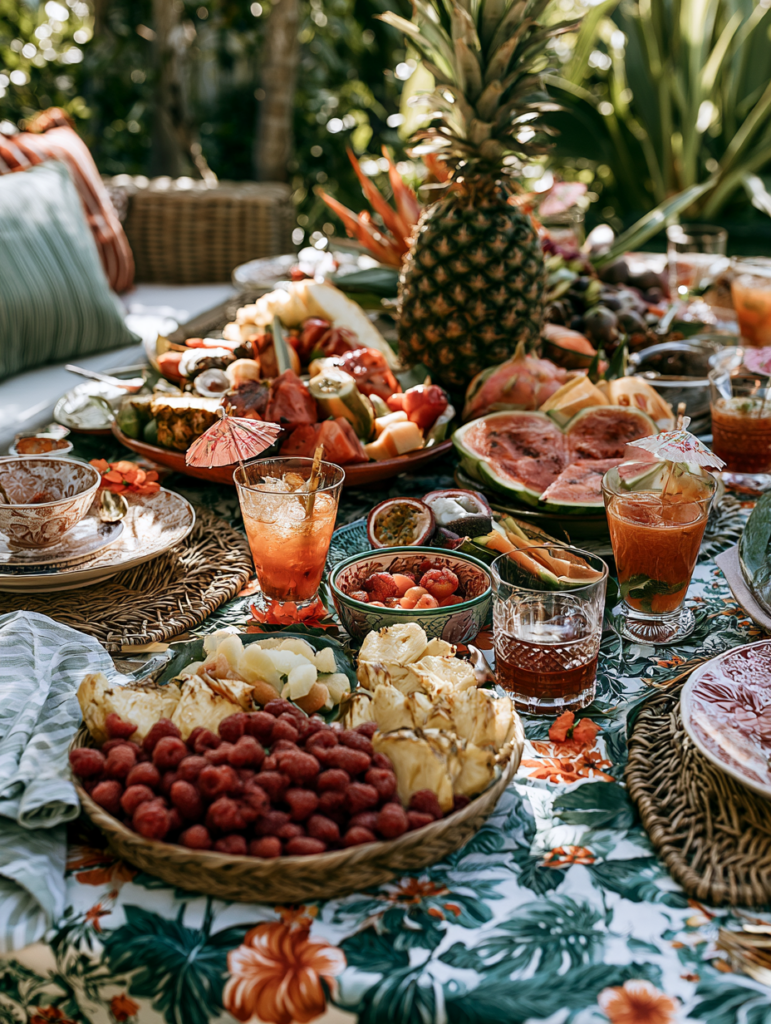
Flowers aren’t the only way to anchor a table — and often, they’re not the most interesting one.
Some of the most memorable centerpieces don’t bloom at all. They rely instead on shape, texture, light, and repetition to create presence without interruption. The result feels modern, composed, and often more aligned with how people actually gather: talking across the table, passing plates, lingering longer than planned.
Centerpieces without flowers invite a different kind of creativity — one rooted in atmosphere rather than arrangement.
“Flowers aren’t the only way to anchor a table — and often, they’re not the most interesting one.”
Why Go Floral-Free?
A floral-free centerpiece opens up the table creatively.
Without a traditional arrangement anchoring the setting, the table becomes a more open canvas — one shaped by light, texture, repetition, and scale rather than stems and blooms. Candle groupings, sculptural objects, seasonal elements, and shared pieces can be layered and edited in countless ways, giving you far more freedom to express a point of view.
These centerpieces are inherently flexible. They adapt to the mood you’re setting, the length of the table, and the rhythm of the evening itself. They stay composed as the night unfolds, sit comfortably below eye level, and allow conversation, food, and movement to take precedence.
The result is a table that feels modern and intentional — one that supports the gathering rather than defining it, and leaves room for the experience to take center stage.
Candle Groupings That Set the Tone
Nothing replaces candlelight when it comes to warmth.
A grouping of candles — varied slightly in height, unified in material — creates atmosphere without blocking conversation. Glass, brass, or ceramic holders reflect light softly, allowing the glow to move across the table rather than sit in one place.
The key is repetition. A single candle can feel tentative; a considered cluster feels intentional. Spread them evenly down the center of the table or anchor them at intervals for a look that feels balanced and unforced.
Sculptural Objects With Presence
Sculptural pieces work best when they feel grounded and tactile.
Stone, ceramic, wood, or hand-thrown vessels add weight to the table without visual clutter. These elements don’t need to be tall or ornate — in fact, lower profiles often feel more modern and hospitable.
When choosing sculptural pieces, think in pairs or trios rather than singles. Repetition creates rhythm, allowing the table to feel cohesive rather than decorative.
“Without a traditional arrangement anchoring the setting, the table becomes a more open canvas — shaped by light, texture, repetition, and scale rather than stems and blooms.”
Seasonal Elements, Edited
Seasonality doesn’t require stems and blooms.
Branches, fruit, nuts, citrus, or even herbs can introduce a sense of time and place when used with restraint. A few artfully placed pears in the fall, citrus in winter, or olive branches laid loosely along the table can feel more intentional than a traditional arrangement.
The goal isn’t abundance — it’s suggestion. Enough to signal the season, not overwhelm the setting.
Objects That Invite Interaction
Some of the best centerpieces are meant to be touched.
A stack of linen napkins, a cluster of shared salt cellars, a line of small dishes filled with olives or nuts — these elements double as both design and hospitality. They give guests something to reach for, pass, and engage with, subtly encouraging connection.
When centerpieces invite interaction, the table feels lived-in from the moment guests arrive.
The Unifying Thread
While these floral-free centerpieces take many forms, they share a few quiet principles in common. Not rules in the prescriptive sense, but patterns that consistently support the way people gather around a table.
They tend to be:
- Below eye level, keeping sightlines open and allowing conversation to move easily from one end of the table to the other.
- Built through repetition rather than dominance, giving the table structure without a single element demanding attention.
- Chosen to support the gathering, leaving room for plates to be passed, glasses to be reached for, and people to settle in comfortably.
Together, these choices create a table that feels balanced and composed. The centerpiece establishes mood and atmosphere, then quietly recedes — shaping the experience without ever taking center stage. Centerpieces without flowers offer a sense of freedom: from formality, from fragility, and from the idea that a table must be dressed a certain way to feel complete. When you think beyond blooms, the table opens up. It becomes more conversational, more flexible, and more reflective of the gathering itself — and often, that’s when it feels most intentional.
The Unifying Thread
While these floral-free centerpieces take many forms, they share a few quiet principles in common. Not rules in the prescriptive sense, but patterns that consistently support the way people gather around a table.
They tend to be:
- Below eye level, keeping sightlines open and allowing conversation to move easily from one end of the table to the other.
- Built through repetition rather than dominance, giving the table structure without a single element demanding attention.
- Chosen to support the gathering, leaving room for plates to be passed, glasses to be reached for, and people to settle in comfortably.
Together, these choices create a table that feels balanced and composed. The centerpiece establishes mood and atmosphere, then quietly recedes — shaping the experience without ever taking center stage. Centerpieces without flowers offer a sense of freedom: from formality, from fragility, and from the idea that a table must be dressed a certain way to feel complete. When you think beyond blooms, the table opens up. It becomes more conversational, more flexible, and more reflective of the gathering itself — and often, that’s when it feels most intentional.